



After years of tooth loss led to severe jawbone resorption and difficulty eating, specialists at FV Hospital restored the patient’s smile by placing 10 dental implants in one procedure.
How years of tooth loss lead to jawbone loss
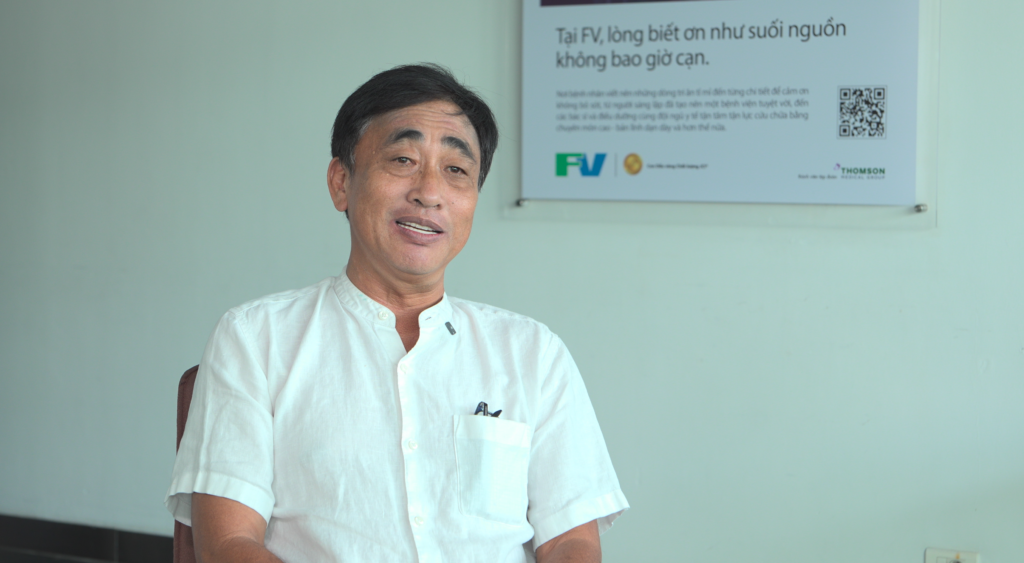
For many years, Mr Lam Quang Kieu Phong (55, Ho Chi Minh City) experienced tooth loss. Some teeth remained in the upper jaw, but most were missing in the lower jaw, making effective chewing nearly impossible. Beyond affecting his appearance, the long-term tooth loss significantly affected his quality of life and daily eating habits.
Screening and imaging at FV Hospital revealed significant jawbone resorption due to years without tooth replacement. The few remaining teeth were unevenly distributed, further reducing chewing efficiency.
Mr Phong had considered various options for restoring his teeth but was reluctant to use removable dentures. In cases of severe tooth loss and jawbone resorption, dentures often do not provide the desired comfort, stability, or chewing function.
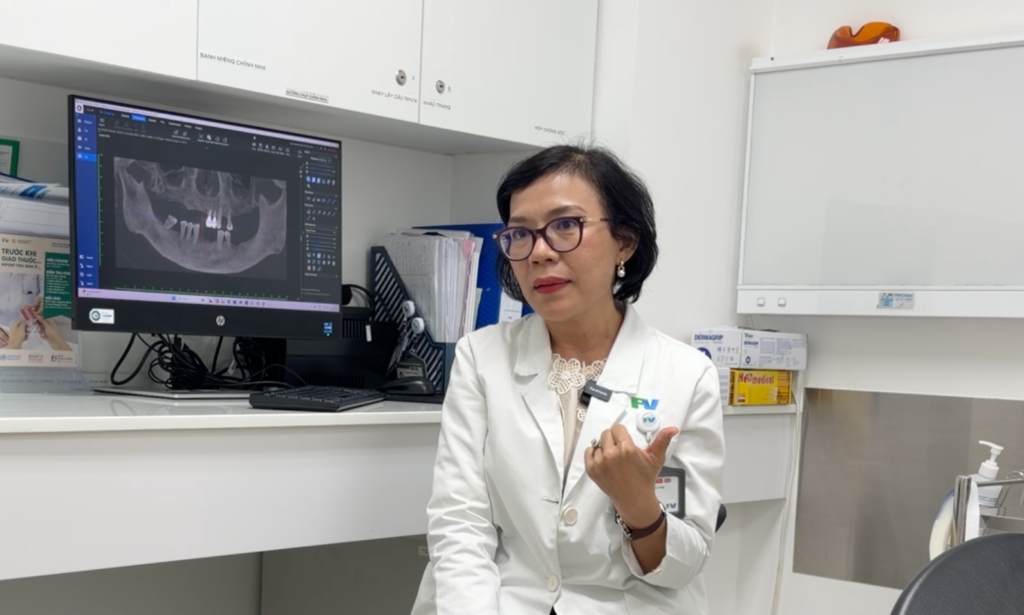
After assessing Mr Phong’s oral health, jawbone condition and general medical history, Dr Cao Thi Thu Trang, MSc, from FV Hospital’s Oral and Maxillofacial Department, recommended full-arch implant rehabilitation.
The treatment plan involved placing four implants in the upper jaw to support a 12-tooth bridge and six implants in the lower jaw to restore a further 12 teeth, all during a single procedure.
“Before I Knew It, Everything Was Done”
While placing a single dental implant is relatively straightforward, full-arch rehabilitation requires meticulous planning. The position and angle of each implant must be carefully calculated according to the patient’s bone structure and the amount of available jawbone.
In Mr Phong’s case, the two front implants were placed vertically, while the posterior implants were angled strategically to avoid the maxillary sinus and important nerve structures. This approach provided sufficient support for a full-arch bridge without requiring additional surgical procedures.
Because Mr Phong also had cardiovascular disease and diabetes, his case was reviewed by both cardiology and endocrinology specialists before surgery. Treatment only proceeded once his medical conditions were well controlled.

The procedure was carried out under general anaesthetic in a sterile operating theatre. In just three hours, surgeons successfully placed all 10 implants in a single operation, and Mr Phong was discharged later that same day.
“I went to sleep and when I woke up, everything was finished,” Mr Phong recalled. “After resting briefly, I was able to go home. I hardly felt any discomfort and didn’t even need the prescribed pain medication.”
Three days after surgery, once the initial swelling had subsided, Dr Trang checked his bite and fitted a temporary prosthesis. This allowed him to eat comfortably while his gums healed and stabilized before the final restoration.
During the healing period, Mr Phong attended monthly follow-up appointments to monitor and adjust his bite as needed. This helps prevent uneven chewing forces from placing excessive pressure on the new implants.
Once his gums had healed, he was advised on cleaning around the temporary bridge with a water flosser, especially in areas prone to food debris. Careful oral hygiene is essential to prevent complications and promote long-term implant success.
Three months after surgery, Mr Phong received his permanent prosthesis and continued attending routine review appointments every three months.
At his latest follow-up, he said that his new teeth felt stable, eating was much easier, and he felt more confident in daily social interactions.
Full-arch implants: A long-term solution for severe tooth loss
According to Dr Cao Thi Thu Trang, full-arch implant rehabilitation can be an excellent option for patients who have experienced extensive tooth loss and significant jawbone resorption, particularly when removable dentures no longer provide satisfactory function or comfort. Unlike removable prostheses, full-arch implants offer a fixed solution that restores both chewing ability and confidence.
Dr Trang encourages everyone to prioritise oral health through regular dental examinations. Don’t ignore symptoms such as gum inflammation, bleeding, or loose teeth. Seeking early treatment can prevent more serious dental problems, reduce the risk of tooth loss, and help preserve jawbone health long term.
To learn more about diagnostic and treatment services provided by FV Hospital’s Oral and Maxillofacial Department, patients can visit 6 Nguyen Luong Bang Street, Tan My Ward, Ho Chi Minh City, or call (028) 3511 3333. FV Hospital also supports patients with combined Social Health Insurance, private insurance arrangements, and 0% interest instalment payment options.
Related News
See moreRelated News
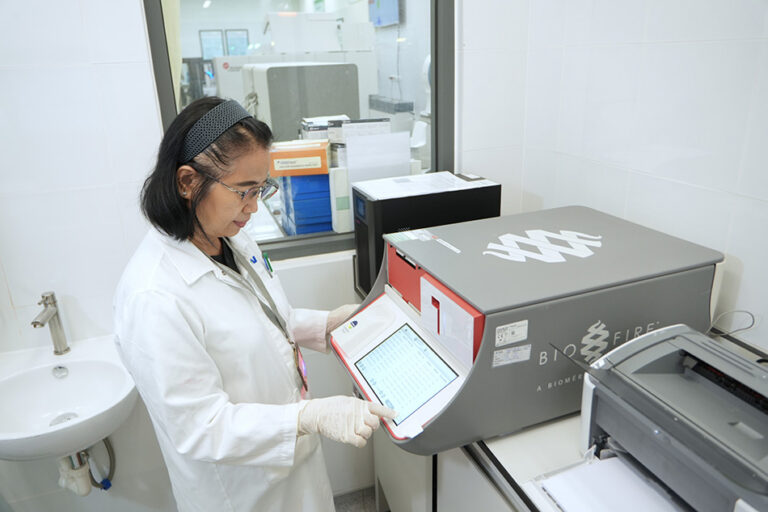
Quickly identify pathogens with 4 molecular diagnostic systems at FV
With four advanced rapid molecular diagnostic systems, BioFire® FilmArray®, QIAGEN QIAstat-Dx®, Cepheid GeneXpert®, and Sansure iPonatic III, the FV Hospital Laboratory & Blood Bank Department offers a wide range of rapid testing to help identify the bacteria, viruses and other infectious pathogens, helping your doctor make timely and informed treatment decisions. FV Hospital Laboratory & […]
Two Vietnamese midwives attain international IBCLC certification in breastfeeding counselling
Two midwives from FV Thomson’s Maternity Department have earned IBCLC (International Board Certified Lactation Consultant) certification, the international credential for breastfeeding support specialists. This achievement represents a significant clinical milestone in infant feeding support at FV Hospital, driven by the real-world complexities these practitioners encounter daily when supporting mothers and their newborns. Beyond certification: A […]
Nutcracker Syndrome: How a one-hour stent placement ended a year of abdominal pain
FV Hospital successfully treated a complex case of nutcracker syndrome using minimally invasive endovascular stenting, sparing the patient major open surgery. Persistent abdominal pain linked to renal vein entrapment For over a year, 41-year-old Ms V.T.K.P. from Ho Chi Minh City experienced persistent, dull lower abdominal pain that worsened with prolonged sitting or standing. As […]
Abdominal pain misdiagnosed as digestive issue: 23-year-old woman diagnosed with ovarian torsion
While studying abroad in South Korea, N.T.T.M. (23) experienced unusual pain in her lower right abdomen. She sought treatment at a local hospital and received medication for a suspected digestive issue. After returning to Vietnam to visit her family, the pain recurred and worsened. On her friends’ advice, M. visited FV Hospital for evaluation. She […]
Quickly identify pathogens with 4 molecular diagnostic systems at FV
Two Vietnamese midwives attain international IBCLC certification in breastfeeding counselling
Nutcracker Syndrome: How a one-hour stent placement ended a year of abdominal pain

