



Prostate Artery Embolisation (PAE) – A Minimally Invasive Solution for Elderly Patients with Benign Prostatic Hyperplasia
In recent years, this procedure has increasingly demonstrated its effectiveness in reducing the need for prostate removal and is now available at FV Hospital.
Prostate Artery Embolisation (PAE) is a widely used treatment for benign prostatic hyperplasia (BPH), providing a minimally invasive alternative to prostate removal surgeries such as TURP (Transurethral Resection of the Prostate) or laser procedures. PAE is conducted in the Cathlab under local anaesthesia, avoiding the need for general anaesthesia.
A recent notable case at FV Hospital involved Dr Huynh Huu Danh, Specialist Level I from the Imaging & Interventional Radiology Department at FV Hospital, performing the PAE procedure on an 87-year-old male patient who had endured BPH for many years. This procedure was uniquely carried out under the observation and guidance of Professor Mark Ryan (*), a distinguished European interventional radiologist currently working at Trinity College Dublin and Beacon Hospital in Ireland.
Following the intervention, the patient’s health stabilised with no complications reported, allowing for discharge after one night of monitoring. One week post-procedure, Dr Danh evaluated the patient’s symptoms and quality of life, noting significant improvements. The patient reported reduced daytime urination frequency, fewer nighttime urinations, and a stronger urinary stream. His International Prostate Symptom Score (IPSS) improved markedly, decreasing from 17 prior to the procedure to 10 afterwards.
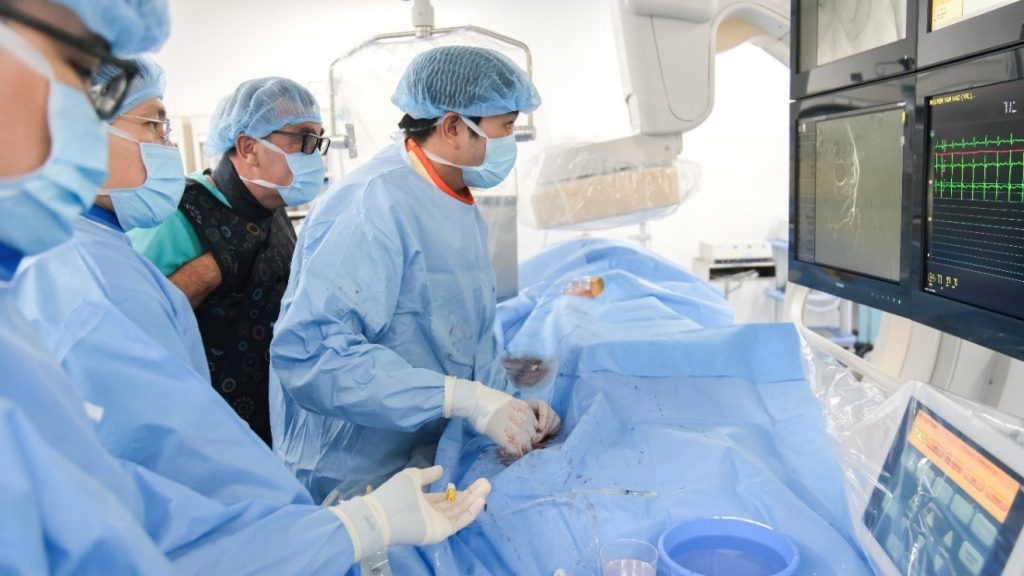
To perform the PAE procedure, an interventional radiologist creates an access point in the right femoral artery and guides a catheter into the internal iliac arteries. Using a Digital Subtraction Angiography (DSA) imaging system, the practitioner will manoeuvre a microcatheter through the main catheter to reach the prostate arteries. Once the microcatheter is correctly positioned, an embolic agent is injected to block these blood vessels, effectively cutting off the blood supply to the prostate gland.
The enlarged prostate typically begins to shrink within 2-3 weeks, with noticeable improvement in lower urinary tract symptoms in approximately 2 weeks.
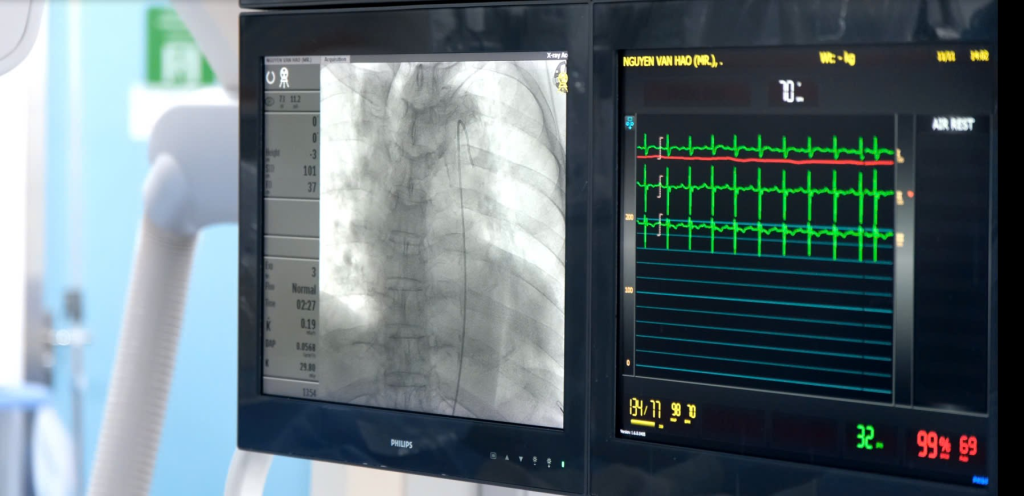
The Imaging & Interventional Radiology Department at FV Hospital, with its experienced team of doctors, state-of-the-art equipment, and support from international experts, consistently delivers excellent treatment outcomes using advanced techniques. Alongside embolisation procedures for benign prostatic hyperplasia, the department has successfully treated complex conditions with interventional radiology methods, including transarterial chemoembolization (TACE) for liver cancer, retinoblastoma treatment, monitoring and intervention for cerebral aneurysms and vascular malformations, uterine fibroid embolisation, uterine artery embolisation to prevent postpartum haemorrhage, and sclerotherapy for venous malformations, among others.
The Interventional Radiology Unit continues to strive to be a trusted partner in healthcare, expanding collaborations with organisations and medical experts to enhance expertise and treatment outcomes.
(*) Professor Mark Ryan is a specialist in cancer treatment and vascular conditions, using minimally invasive techniques such as chemoembolisation and tumour ablation. With over 20 years of experience in research and teaching, he has more than 170 published scientific articles, accumulating over 2,650 citations. He has presented at numerous international conferences, including CIRSE, ECR, and WCIO, and serves as an organiser, scientific reviewer, and expert advisor for various interventional radiology organisations across Europe.
Related News
See moreRelated News
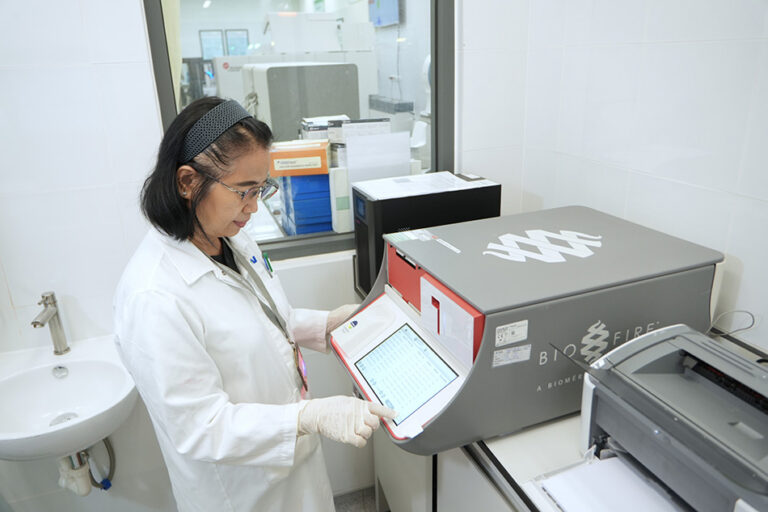
Quickly identify pathogens with 4 molecular diagnostic systems at FV
With four advanced rapid molecular diagnostic systems, BioFire® FilmArray®, QIAGEN QIAstat-Dx®, Cepheid GeneXpert®, and Sansure iPonatic III, the FV Hospital Laboratory & Blood Bank Department offers a wide range of rapid testing to help identify the bacteria, viruses and other infectious pathogens, helping your doctor make timely and informed treatment decisions. FV Hospital Laboratory & […]
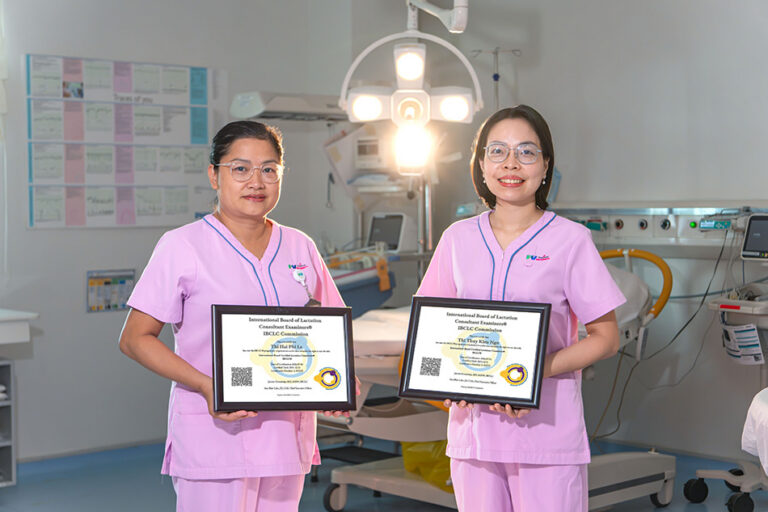
Two Vietnamese midwives attain international IBCLC certification in breastfeeding counselling
Two midwives from FV Thomson’s Maternity Department have earned IBCLC (International Board Certified Lactation Consultant) certification, the international credential for breastfeeding support specialists. This achievement represents a significant clinical milestone in infant feeding support at FV Hospital, driven by the real-world complexities these practitioners encounter daily when supporting mothers and their newborns. Beyond certification: A […]

Nutcracker Syndrome: How a one-hour stent placement ended a year of abdominal pain
FV Hospital successfully treated a complex case of nutcracker syndrome using minimally invasive endovascular stenting, sparing the patient major open surgery. Persistent abdominal pain linked to renal vein entrapment For over a year, 41-year-old Ms V.T.K.P. from Ho Chi Minh City experienced persistent, dull lower abdominal pain that worsened with prolonged sitting or standing. As […]

TROP2-directed ADCs: A breakthrough in improving outcomes in advanced/metastatic triple-negative breast cancer
Advances in the treatment of advanced/metastatic triple-negative breast cancer are providing new treatment options for patients; particularly where existing therapies have limited efficacy. Among these, TROP2-directed antibody-drug conjugates (ADCs) are receiving increasing attention from the oncology community, supported by emerging clinical evidence on their efficacy and potential to improve treatment outcomes. The Scientific Seminar organised […]
Quickly identify pathogens with 4 molecular diagnostic systems at FV
Two Vietnamese midwives attain international IBCLC certification in breastfeeding counselling
Nutcracker Syndrome: How a one-hour stent placement ended a year of abdominal pain

