




Doctors at FV Hospital have successfully used the da Vinci Xi robotic surgical system to remove a lung tumour and perform bilateral mediastinal lymph node dissection on both sides of the chest during a single operation. This innovative technique offers new hope for curative treatment in carefully selected patients with advanced lung cancer and extensive disease.
Lung cancer discovered after frequently experienced shortness of breath
While receiving treatment for sepsis at a hospital in Ho Chi Minh City, Mrs Nguyen Thi Them (62 years old, HCMC) frequently experienced shortness of breath. A subsequent CT scan revealed two nodules in the lower lobe of her left lung. The most suspicious nodule was biopsied transthoracically and confirmed to be cancerous.
Around two weeks after being discharged, Mrs Them was taken to FV Hospital by her son for further assessment and treatment for her lung tumour. Dr Dang Dinh Minh Thanh, PhD, Specialist Level II, Head of Thoracic Surgery and Head of the FV da Vinci Robotic Surgery Centre, noted that although the patient’s tumours were relatively small, they were located close to major blood vessels and the trachea. If the patient was treated with medication instead of surgery, any complications that developed later could significantly reduce the chances of successful surgical treatment. Trusting the doctor’s experience and dedicated advice, the family decided to proceed with robotic surgery at FV Hospital.
Breakthrough: Bilateral mediastinal lymph node dissection in a single procedure
The challenge in this case was that despite the small size of the tumours, the patient had multiple lymph nodes on both sides of the chest. For the left-sided nodes, standard laparoscopic dissection is typically very difficult. Crucially, the CT results also revealed a 7 mm lymph node on the right side. Performing conventional keyhole surgery from the left side of the chest would make it extremely difficult for the surgeon to access this right-sided node.
With open surgery or traditional laparoscopy, surgeons would need to create an additional surgical incision or even perform a second operation to reach the contralateral lymph nodes. However, thanks to the da Vinci Xi robotic system, the surgical team at FV performed complete bilateral lymph node dissection in just a single operation. This advanced technique demands exceptional precision.
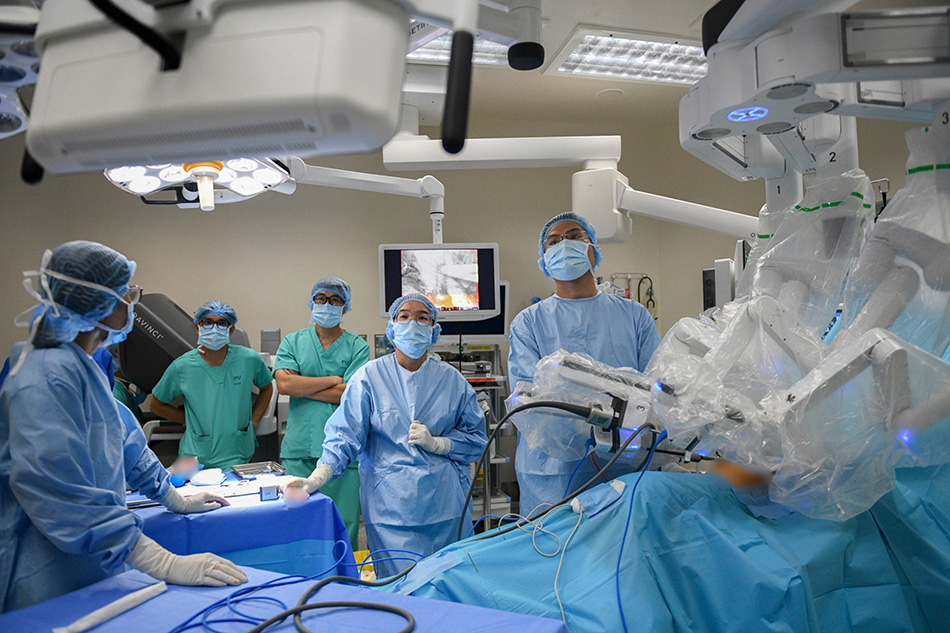
The Thoracic Surgery team performing robotic lung tumour removal and lymph node dissection using the da Vinci Xi system.
Dr Dang Dinh Minh Thanh, PhD, Specialist Level II, stated: “We decided to perform bilateral mediastinal lymph node dissection within the same procedure. Our goal was to remove as much diseased tissue as possible while thoroughly assessing the lymph nodes without increasing the patient’s surgical risk. This is the the first reported case in the medical literature where left lung lobectomy and bilateral mediastinal lymph node dissection were performed simultaneously through a single robotic approach,” Dr Thanh highlighted.
Rapid recovery with minimal pain after surgery
Just two days after major surgery, Mrs Them was able to sit up, get out of bed, walk, eat, and resume basic daily activities with the assistance of nurses.
“I was surprised by how little pain I experienced after the operation. My recovery was much faster than I expected, and I slept significantly better than before the surgery,” Mrs Them shared happily before her discharge.
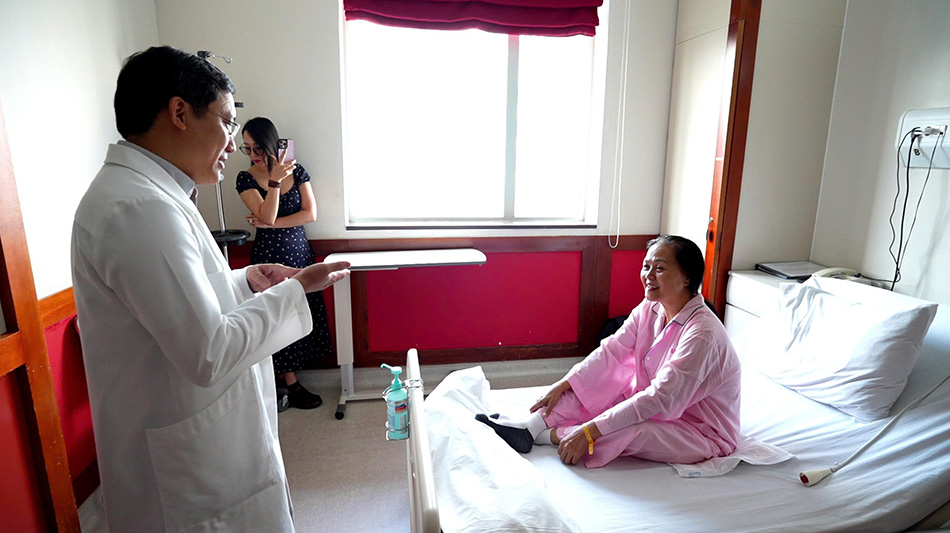
Mrs Them shares that she experienced very little pain after her operation.
Dr Dang Dinh Minh Thanh, PhD, Specialist Level II, advises: “For small lung nodules measuring 6 mm or larger, patients should not ignore them. Regular monitoring and evaluation by a specialist are essential to determine appropriate management and avoid missing the “golden window” for lung cancer treatment. In particular, robotic surgery is is expanding the possibilities of lung cancer care, delivering greater precision, smaller incisions, less postoperative pain and faster recovery.”
According to Dr Thanh, many cases of lung cancer detected at an early stage can still undergo radical surgery with an excellent chance of successful treatment. Even for tumours measuring around 4 cm, provided clinical criteria are met, patients still have the opportunity to receive surgical treatment right from the start.
For consultations on thoracic surgery and robotic lung cancer treatment using the da Vinci Xi system, patients can contact the Robotic Surgery Centre, FV Hospital at 6 Nguyen Luong Bang Street, Tan My Ward (formerly District 7), Ho Chi Minh City. Tel: (028) 3511 3333.
Related News
See moreRelated News

Nutcracker Syndrome: How a one-hour stent placement ended a year of abdominal pain
FV Hospital successfully treated a complex case of nutcracker syndrome using minimally invasive endovascular stenting, sparing the patient major open surgery. Persistent abdominal pain linked to renal vein entrapment For over a year, 41-year-old Ms V.T.K.P. from Ho Chi Minh City experienced persistent, dull lower abdominal pain that worsened with prolonged sitting or standing. As […]
Abdominal pain misdiagnosed as digestive issue: 23-year-old woman diagnosed with ovarian torsion
While studying abroad in South Korea, N.T.T.M. (23) experienced unusual pain in her lower right abdomen. She sought treatment at a local hospital and received medication for a suspected digestive issue. After returning to Vietnam to visit her family, the pain recurred and worsened. On her friends’ advice, M. visited FV Hospital for evaluation. She […]
Advanced robotic surgery at FV Hospital removes tumour near aorta
Surgeons at FV Hospital used the da Vinci Xi robotic surgical system to successfully remove a fibrous tumour located in a difficult-to-access area next to the aorta in a 46-year-old woman. Ms Nguyen Thuy Phuong Dung recovered well after surgery to remove the fibrous tumour from her left chest. Image: FV When a subtle chest […]
Boy with ‘boneless arm’ and decade-long journey to find hope
A jump at the age of six left young D.V.C. with devastating consequences: a left forearm almost entirely devoid of skeletal architecture, facing the prospect of limb amputation through joint disarticulation. For more than ten years, hope faded as every attempt at recovery stalled. It was only through the intervention of the Children of Vietnam […]
Nutcracker Syndrome: How a one-hour stent placement ended a year of abdominal pain
Abdominal pain misdiagnosed as digestive issue: 23-year-old woman diagnosed with ovarian torsion
Advanced robotic surgery at FV Hospital removes tumour near aorta

