




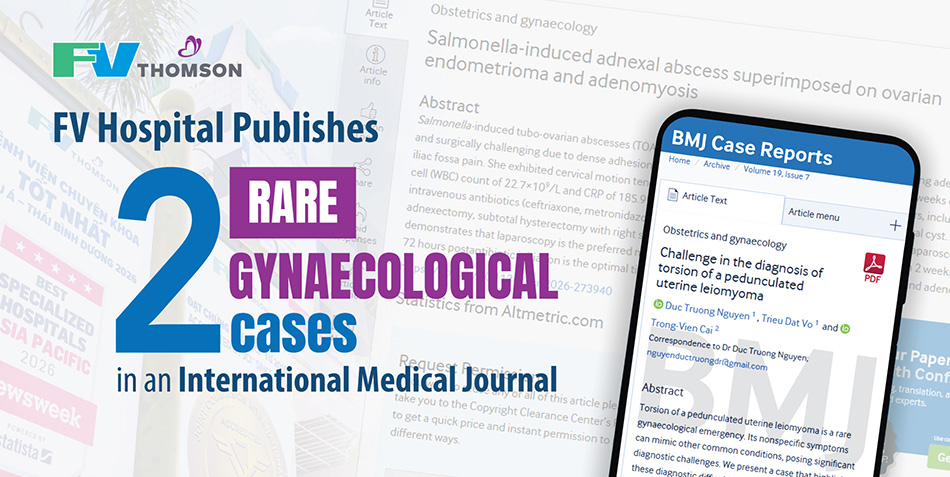
The reports, led by Dr Nguyen Duc Truong as the principal author, with co-authors Dr Vo Trieu Dat, MSc, and Dr Duong Bich Thuy, PhD, document two rare and complex gynaecological cases: a tubo-ovarian abscess caused by Salmonella and a twisted pedunculated fibroid.
These publications provide additional clinical data on the diagnosis and management of rare gynaecological conditions. They also highlight the crucial role of comprehensive assessment and multidisciplinary collaboration when patients present with unusual or non-specific symptoms.
Tubo-ovarian abscess caused by Salmonella: A rare condition in clinical practice
A woman in her late 30s was admitted to FV Hospital with severe lower abdominal pain. Clinical assessment showed that the patient had a tubo-ovarian abscess, a serious pelvic infection.
What made this case particularly unusual was the laboratory culture, which identified Salmonella as the cause of the infection. Although Salmonella most commonly causes gastrointestinal infections such as food poisoning, it is extremely rare for the bacterium to spread through the bloodstream to infect the female reproductive tract.
The patient also had a history of endometriosis and adenomyosis, which had resulted in extensive pelvic adhesions. This made surgery considerably more challenging because of the increased risk of injury to surrounding organs.
Given these complexities, FV Thomson Maternity team worked closely with specialists from other disciplines to conduct a comprehensive assessment. The team first treated the infection with appropriate antibiotic therapy before proceeding with surgery.
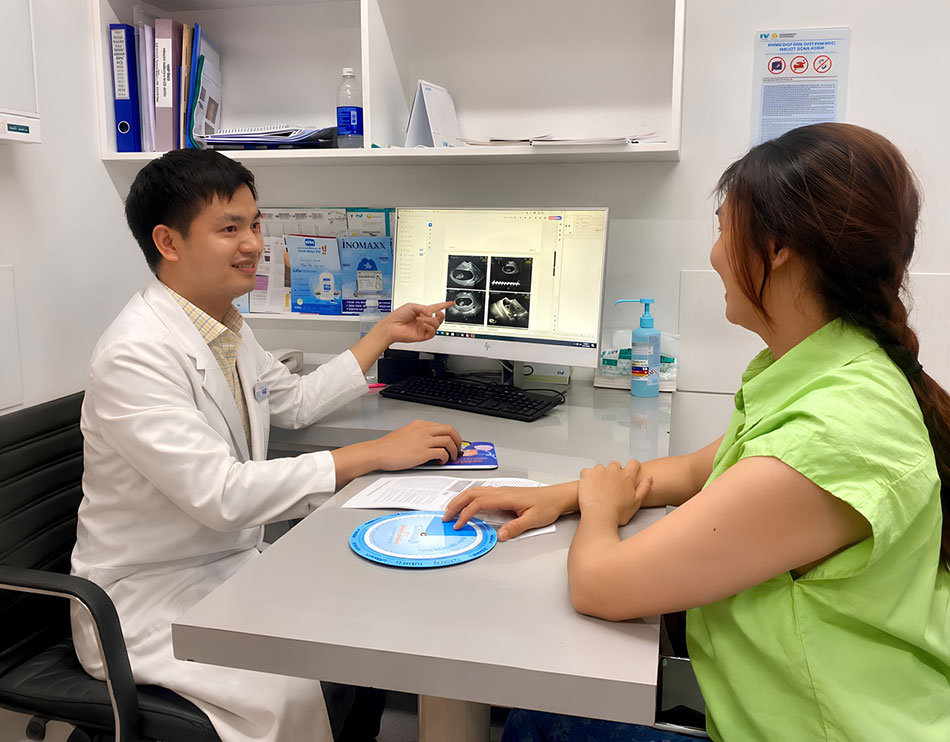
Dr Nguyen Duc Truong consults a patient at the FV Thomson Maternity Department.
After 72 hours of treatment, the patient underwent laparoscopic surgery to release the adhesions, drain the abscess and perform a subtotal hysterectomy. The surgical approach was individualised according to her clinical condition and treatment preferences. She recovered well following the procedure and was discharged after approximately two weeks.
A twisted pedunculated fibroid causing acute abdominal pain, easily mistaken for a digestive disorder
The second case involved a woman in her late 20s who was admitted with acute abdominal pain and diarrhoea. Because her initial symptoms were non-specific, she had previously sought medical attention elsewhere without receiving a definitive diagnosis.
During her assessment at FV Hospital, doctors identified several clinical findings that were not entirely consistent with a typical gastrointestinal condition. The Obstetrics & Gynaecology team worked closely with the Imaging Department to review Doppler ultrasound and pelvic CT findings.
The imaging revealed a twisted pedunculated fibroid (FIGO type 7), a rare gynaecological condition that can lead to tumour necrosis and peritonitis if left untreated.
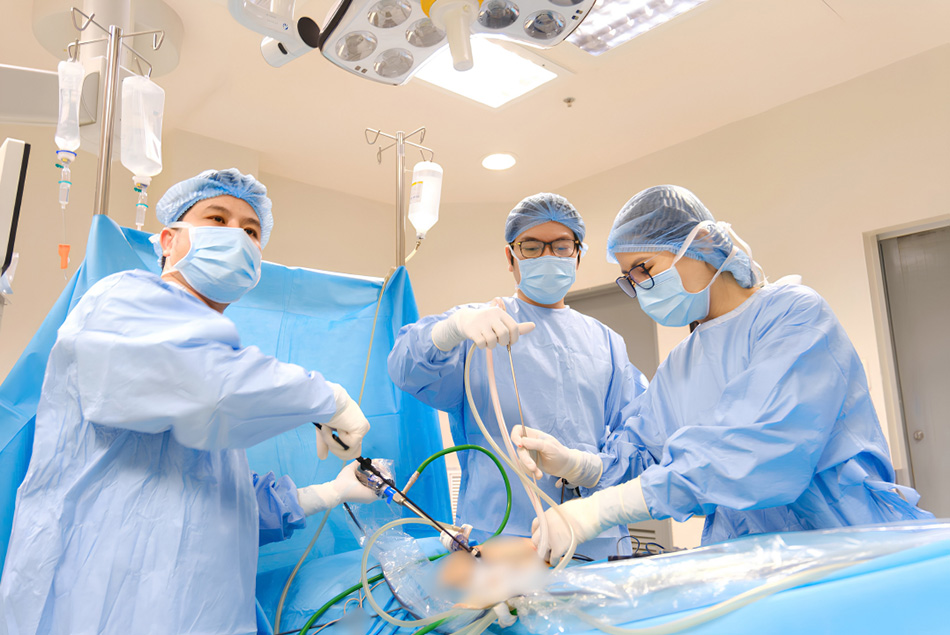
FV Thomson Maternity doctor team performs laparoscopic surgery
The patient underwent emergency laparoscopic surgery to untwist and remove the fibroid. Prompt surgical intervention enabled doctors to preserve both the uterus and ovaries. After two days of post-operative observation, she was discharged home in a stable condition.
From clinical practice to international medical research
Dr Nguyen Duc Truong noted that rare clinical cases can pose significant diagnostic and treatment challenges because symptoms are often atypical and management must be tailored to each patient.
By publishing these two case reports in BMJ Case Reports, the team is able to share valuable clinical experience with the international medical community, particularly in recognising and managing uncommon gynaecological conditions.
This research reflects FV Hospital’s ongoing commitment to clinical research, continuous professional development and improving patient care through evidence-based practice.
Read the full reports here:
Related News
See moreRelated News

Nutcracker Syndrome: How a one-hour stent placement ended a year of abdominal pain
FV Hospital successfully treated a complex case of nutcracker syndrome using minimally invasive endovascular stenting, sparing the patient major open surgery. Persistent abdominal pain linked to renal vein entrapment For over a year, 41-year-old Ms V.T.K.P. from Ho Chi Minh City experienced persistent, dull lower abdominal pain that worsened with prolonged sitting or standing. As […]

The Pink Month 2026 at FV: Raising awareness and taking proactive care of breast health
Every year, millions of women worldwide are diagnosed with breast cancer. In 2024, an estimated 2.43 million new cases and nearly 694,000 deaths from breast cancer were recorded globally. In Vietnam, GLOBOCAN 2022 estimated 24,563 new cases, making breast cancer the most commonly diagnosed cancer among women. Behind these statistics are the individual health stories […]
Shining star of Aug 2026
The Shining Star of August 2026 has been awarded to Ms Thai Truong Thuy Tien, Liaison Officer. With her dedication and professionalism, Ms Tien continually overcomes challenges and makes valuable contributions to the work of the Liaison Office. Having spent 10 years at FV, Ms Thai Truong Thuy Tien has had a memorable journey filled […]

16th Give Blood – Give Hope blood donation programme: Spreading the spirit of giving
On 25 September 2026, the 16th “Give Blood – Give Hope” blood donation programme, co-organised by FV Hospital and the Blood Transfusion Haematology Hospital, concluded successfully, receiving enthusiastic participation from FV staff, clients and community members. With 134 units of blood collected, the programme helped replenish blood supplies and support emergency care and treatment for […]
Nutcracker Syndrome: How a one-hour stent placement ended a year of abdominal pain
The Pink Month 2026 at FV: Raising awareness and taking proactive care of breast health
Shining star of Aug 2026

