



Advances in the treatment of advanced/metastatic triple-negative breast cancer are providing new treatment options for patients; particularly where existing therapies have limited efficacy. Among these, TROP2-directed antibody-drug conjugates (ADCs) are receiving increasing attention from the oncology community, supported by emerging clinical evidence on their efficacy and potential to improve treatment outcomes.
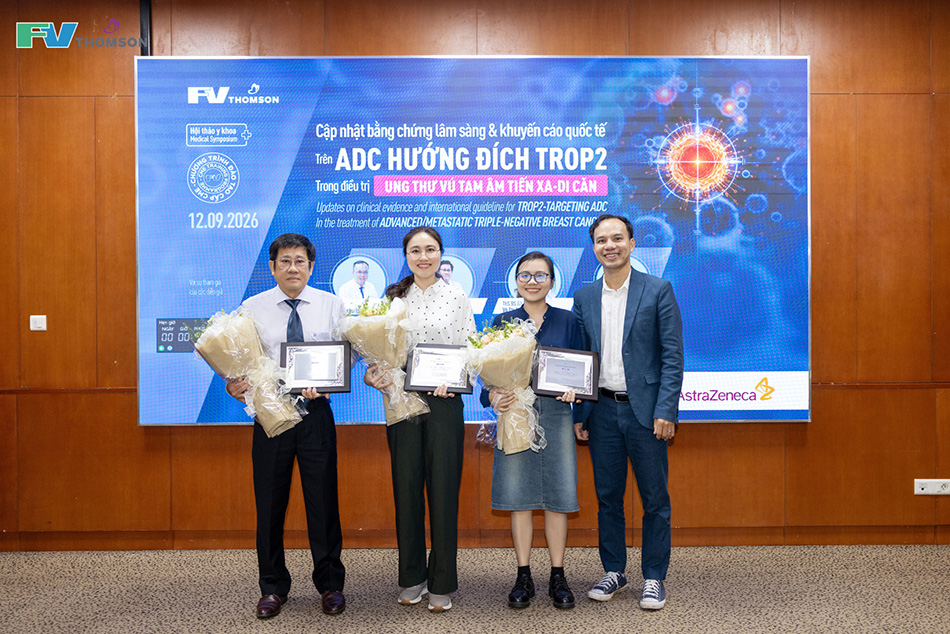
The Scientific Seminar organised by FV Hospital was successfully held
These developments were also the focus of a scientific seminar entitled “Updates on clinical evidence and international guideline for TROP2-Targeting ADC in the treatment of advanced/metastatic triple-negative breast cancer”, organised by FV Hospital on 12 September 2026.
The programme brought together experts from Cho Ray Hospital and FV Hospital, along with more than 200 doctors from hospitals and clinics, to discuss emerging clinical evidence, international recommendations and practical experience in the use of TROP2-directed ADCs.
In his opening remarks, Dr Vu Truong Son, MSc, Medical Director of FV Hospital, stated that FV regularly welcomes international experts for working visits and case consultations, while also organising academic forums. These activities provide medical teams with opportunities to access the latest knowledge, exchange clinical experience and apply advanced approaches to cancer diagnosis and treatment, with the aim of achieving the best possible outcomes for patients.
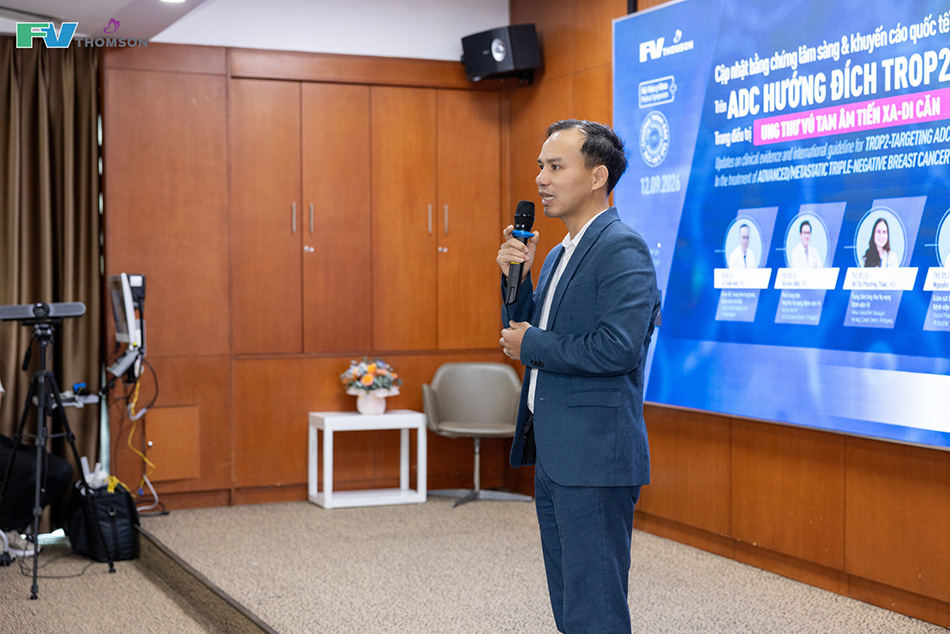
Dr Vu Truong Son, MSc, Medical Director of FV Hospital
Opening the presentation session, Dr Le Tuan Anh, PhD, Director of the Oncology Centre, Cho Ray Hospital, provided an overview of the current treatment landscape for advanced/metastatic triple-negative breast cancer (mTNBC).
The presentation focused on patient groups who are not eligible for immunotherapy, while examining the remaining challenges in treatment selection and management. Although chemotherapy continues to have a role in treatment, limitations in efficacy and toxicity mean that the need for new approaches to achieve better disease control remains an important consideration in clinical practice.
From ESMO and ASCO 2026: New data on TROP2-directed ADCs
Continuing the programme, Dr Vo Kim Dien, MSc, Deputy Head of the Hy Vong Cancer Centre at FV Hospital, presented key findings from ESMO and ASCO 2026, focusing on the role of TROP2-directed antibody-drug conjugates (ADCs) in the treatment of mTNBC.
The presented data showed encouraging results in terms of treatment efficacy. Compared with standard chemotherapy, TROP2-directed ADCs were associated with a lower risk of death and improved overall survival (OS). The objective response rate (ORR) was also higher than with standard chemotherapy.
These results highlight the potential of TROP2-directed ADCs to improve treatment outcomes for patients with advanced/metastatic mTNBC, while providing new opportunities to optimise treatment strategies for patients with complex clinical profiles.
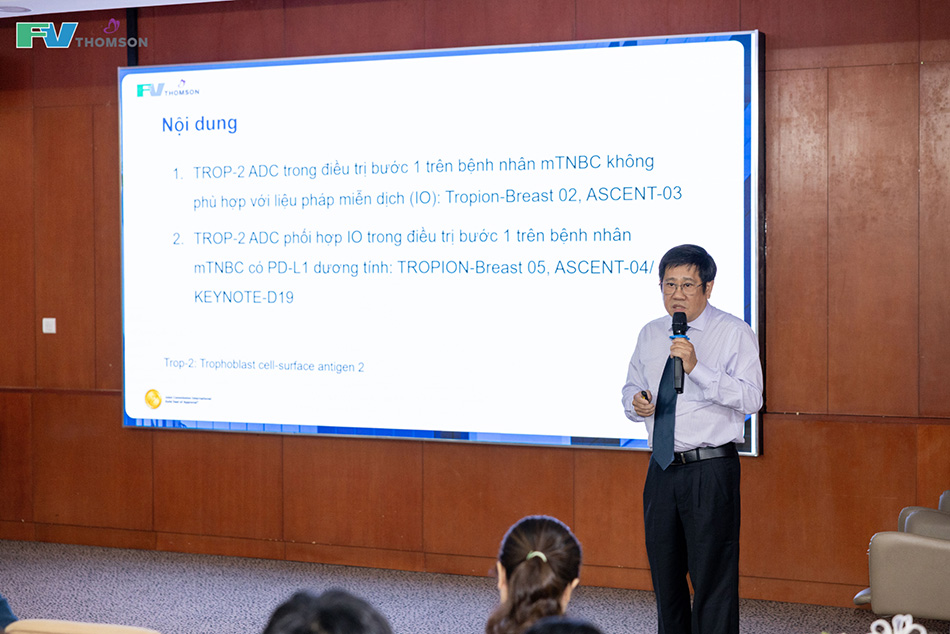
Dr Vo Kim Dien, MSc, Deputy Head of the Hy Vong Cancer Centre at FV Hospital
Managing adverse events: A key factor in treatment continuity
Beyond efficacy, treatment safety and effective management of adverse events are also important considerations when using cancer therapies in clinical practice.
From a clinical pharmacy perspective, Pharmacist Nguyen Thi Khanh Van, MSc – Clinical Pharmacy Supervisor, FV Hospital, explained the mechanism of action of TROP2-directed ADCs and discussed common adverse events, including neutropenia, diarrhoea, stomatitis and ocular surface injury.
The presentation also outlined measures to monitor, prevent and manage adverse events proactively, with the aim of reducing the impact of treatment-related toxicity on patients and supporting treatment adherence.
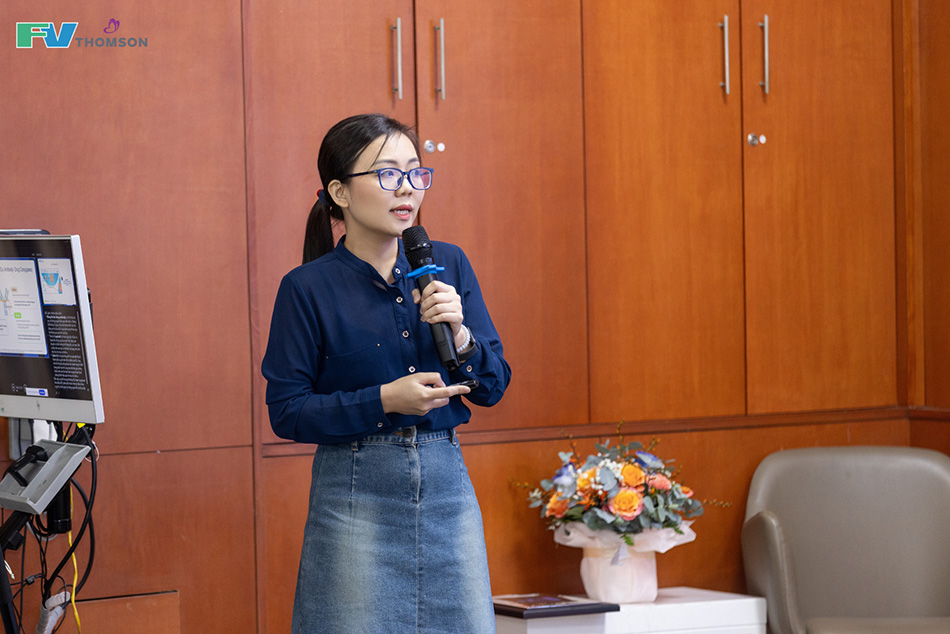
Pharmacist Nguyen Thi Khanh Van, MSc – Clinical Pharmacy Supervisor, FV Hospital
From evidence to practice: Personalising treatment for each patient
Concluding the presentation session, Dr Vo Thi Phuong Thao, MSc, Oncologist at the Hy Vong Cancer Centre at FV Hospital, translated research evidence into clinical practice through the discussion of specific patient cases.
Considering disease characteristics, treatment history and responses to previous therapies, she discussed approaches to selecting appropriate treatment strategies for individual mTNBC cases, particularly for patients who do not respond to or are not eligible for immunotherapy.
Through these clinical scenarios, the presentation highlighted that treatment selection should not rely on a single research finding alone, but should take into account each patient’s overall clinical characteristics and condition.
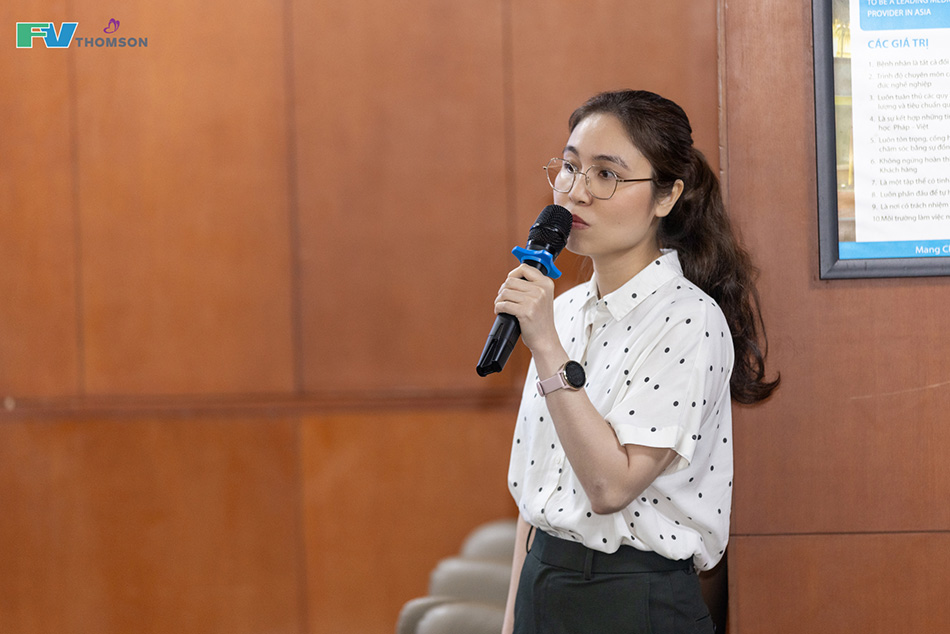
Dr Vo Thi Phuong Thao, MSc, Oncologist at the Hy Vong Cancer Centre at FV Hospital
Connecting scientific evidence with clinical practice
The seminar concluded with a discussion involving the chair, speakers and attendees, providing an opportunity for professional exchange on the challenges of managing advanced/metastatic triple-negative breast cancer in clinical practice.
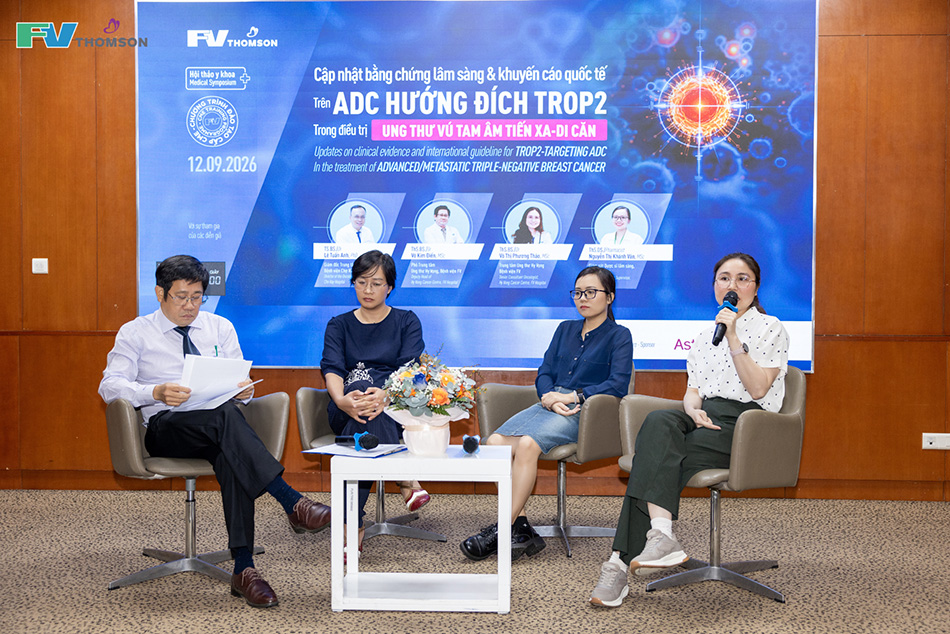
An engaging discussion session featuring practical questions and insightful professional exchanges from the attendees
By reviewing evidence presented at international oncology conferences, examining the efficacy and safety of TROP2-directed ADCs, and discussing specific clinical scenarios, the programme helped bridge scientific evidence and clinical practice, with a focus on appropriate, patient-centred treatment decisions. This seminar also formed part of FV Hospital’s continuing medical education (CME) activities, supporting knowledge sharing, professional exchange and updates on advances in oncology.
Related News
See moreRelated News
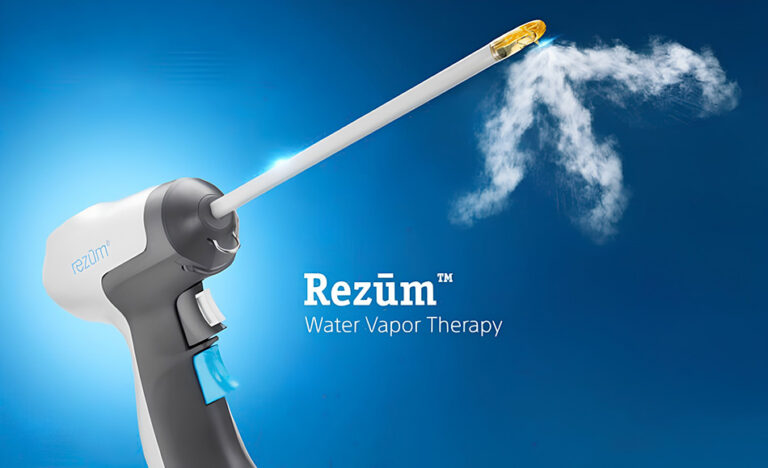
FV Hospital introduces Rezum Water Vapour Therapy: A minimally invasive option for men with benign prostatic hyperplasia
Beyond causing daily inconvenience, benign prostatic hyperplasia (BPH), commonly known as an enlarged prostate, can significantly affect patients’ sleep, overall health and mental well-being. Alongside medication and surgery, patients can now consider Rezūm Water Vapour Therapy, a minimally invasive treatment recently introduced at the Urology & Andrology Department at FV Hospital. How does Rezum work? […]
3.0 Tesla MRI system at FV: Advanced diagnostics, a more comfortable experience
FV Hospital continues to enhance the quality of its screening and routine healthcare services by introducing the state-of-the-art Philips Ingenia Elition X 3.0 Tesla Magnetic Resonance Imaging (MRI) system. This advanced technology not only helps reduce patient waiting times but also delivers exceptionally clear, high-resolution medical images. The addition of this new system underscores FV’s […]
FV First in Southern Vietnam to Use Fusion and Navigation Imaging for Liver Tumour Treatment
For the first time in Southern Vietnam, a complex liver tumour has been successfully treated using a combination of biopsy and radiofrequency ablation (RFA) guided by a next-generation Fusion and Navigation Ultrasound Imaging system at FV Hospital. The minimally invasive procedure was performed under local anaesthesia, completed quickly, and allowed the patient to recover and […]
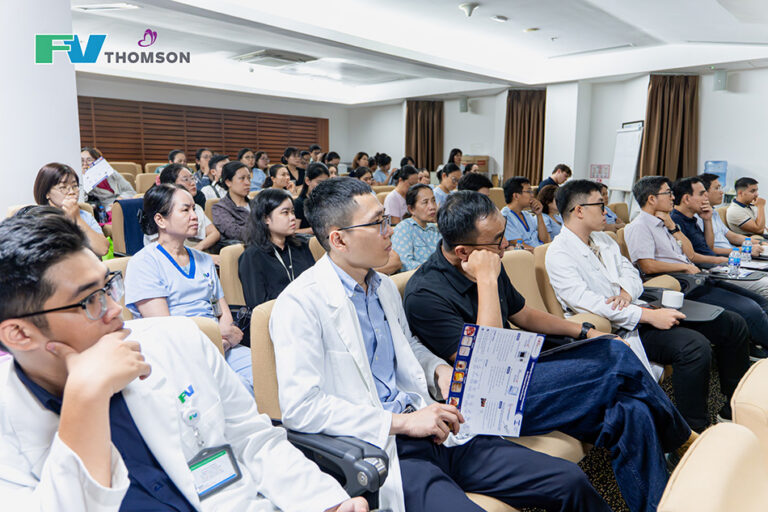
FV Hospital updates its advanced wound closure technologies, improving treatment outcomes and infection control
On 1 July 2026, FV Hospital organised an intensive training programme “Advanced Wound Closure and Infection Control” for its surgeons, nurses and clinical staff. The programme provided the latest updates on advanced wound care solutions currently used around the world. International expert shares the latest advances in wound management The training session was led by […]
FV Hospital introduces Rezum Water Vapour Therapy: A minimally invasive option for men with benign prostatic hyperplasia
3.0 Tesla MRI system at FV: Advanced diagnostics, a more comfortable experience
FV First in Southern Vietnam to Use Fusion and Navigation Imaging for Liver Tumour Treatment

