Advanced diagnostic technology combined with minimally invasive endovascular treatment for precise care, faster recovery and shorter hospital stays.
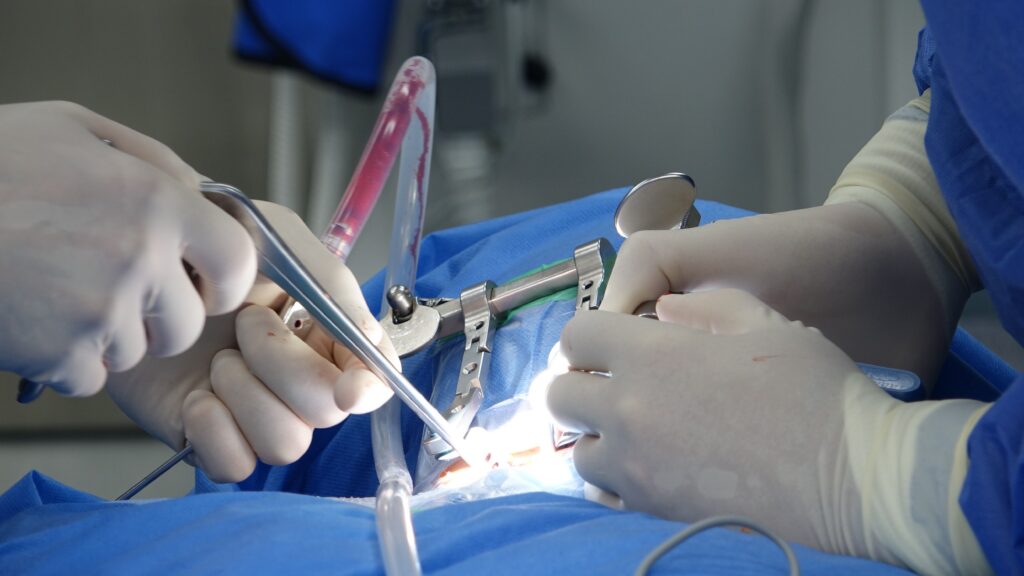
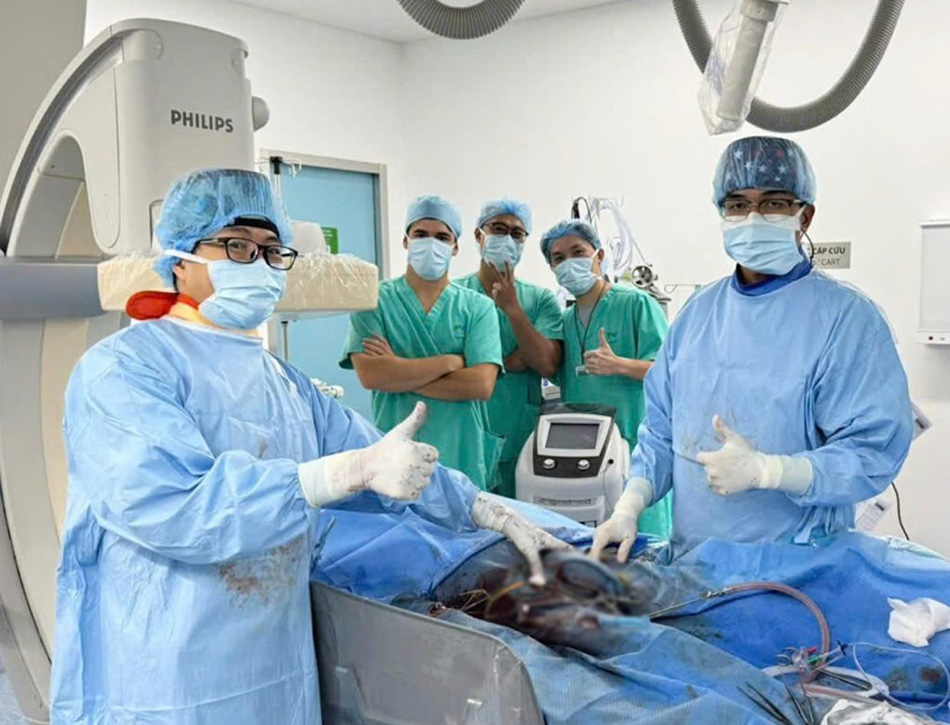
Our team has extensive expertise in minimally invasive endovascular procedures, supported by the latest surgical techniques and advanced medical devices. These approaches enable precise treatment through smaller incisions, helping patients recover faster and spend less time in the hospital.
Vascular Surgery
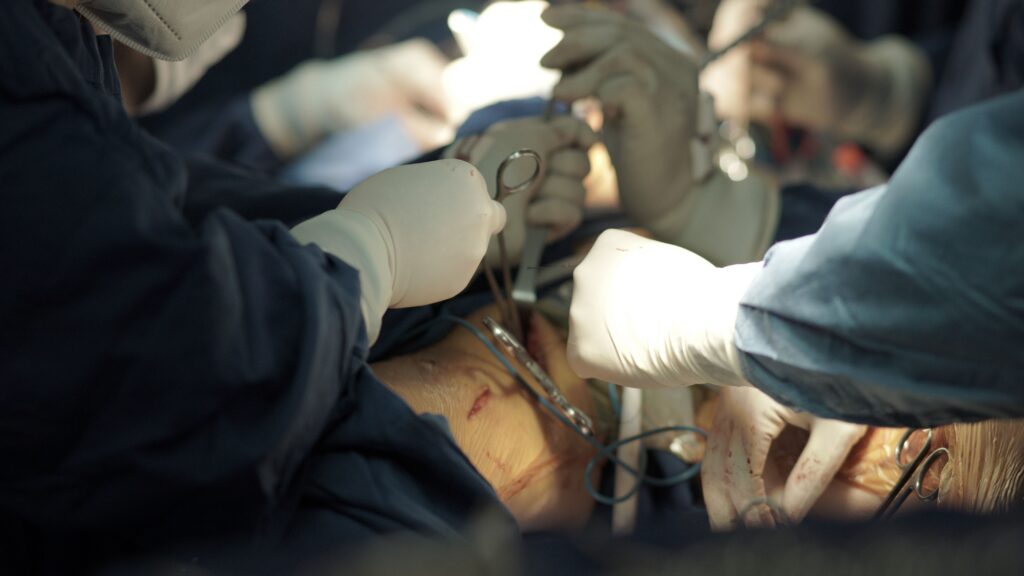
Vascular surgery is a specialised field that treats diseases of the arteries, veins and lymphatic system throughout the body, excluding the heart and brain. At FV Hospital, our vascular specialists combine extensive surgical expertise with advanced techniques, from conventional vascular reconstruction to modern hybrid procedures, delivering safe and effective treatment for both common and complex vascular conditions.
Vascular surgical procedures available at FV Hospital include:
Carotid artery surgery is performed to treat carotid artery stenosis and help prevent stroke. At FV Hospital, our vascular specialists perform carotid endarterectomy (CEA) – the gold standard treatment for atherosclerotic carotid artery disease – as well as carotid artery stenting (CAS) for selected patients, providing effective treatment to restore cerebral blood flow and reduce the risk of stroke.
FV Hospital offers advanced surgical treatment for peripheral arterial disease (PAD), including endarterectomy, bypass surgery, vascular reconstruction and arterial thrombectomy. For patients with severe limb ischaemia, surgery may be combined with endovascular intervention through a hybrid approach to restore blood flow, promote wound healing and maximise the chances of limb salvage.
Bypass surgery and vascular reconstruction are performed to treat severely narrowed, blocked or damaged arteries when blood flow cannot be adequately restored with conventional treatment. These procedures create a new pathway or reconstruct the affected blood vessel to restore circulation to vital organs and limbs.
At FV Hospital, bypass surgery is performed using either the patient’s own vein or a synthetic graft, depending on the location and extent of the disease. Our vascular specialists also perform advanced vascular reconstruction for complex arterial occlusions, traumatic vascular injuries and complications of chronic vascular disease, with the goal of restoring blood flow, preserving organ and limb function, and reducing the risk of long-term complications.
The treatment of aortic aneurysms and aortic dissections is one of the specialised strengths of FV Hospital’s Vascular & Endovascular Surgery Department. Our team offers the full spectrum of modern treatment options, from open aortic repair to endovascular stent grafting (EVAR, TEVAR and CERAB) and hybrid procedures that combine open surgery with endovascular intervention. This comprehensive approach enables many complex aortic conditions to be treated with less invasive techniques, helping reduce complications and support faster recovery.
A well-functioning vascular access is essential for safe and effective haemodialysis. At FV Hospital, our vascular specialists perform arteriovenous fistula (AVF) creation, revision and salvage procedures to ensure reliable long-term vascular access.
In addition to creating AVFs using the patient’s own blood vessels, our team offers both endovascular and open surgical treatment for narrowed, blocked or poorly functioning fistulas. The goal is to maintain durable vascular access, reduce complications and minimise the need for central venous catheters.
Hybrid vascular surgery combines conventional open surgery with endovascular intervention in a single treatment plan. This advanced approach is particularly effective for complex vascular diseases involving multiple levels or sites, where surgery or endovascular treatment alone may not achieve the best outcome.
At FV Hospital, hybrid techniques are used to treat aortic disease, peripheral arterial disease, venous thrombosis and other complex vascular conditions. By combining the strengths of both open and minimally invasive procedures, our vascular specialists are able to restore blood flow more effectively while reducing surgical trauma, lowering the risk of complications and supporting faster recovery.
Advanced Endovascular Techniques
FV Hospital is the first hospital in Vietnam to introduce CO₂ angiography for vascular diagnosis and endovascular intervention. Instead of using conventional iodine-based contrast media, this technique uses carbon dioxide (CO₂) to visualise blood vessels, helping reduce the risk of kidney injury and contrast-related reactions.
CO₂ angiography is particularly beneficial for patients with chronic kidney disease, diabetes or a history of contrast media allergy. Combined with advanced digital angiography systems, it enables our specialists to accurately assess vascular disease and perform complex endovascular procedures using little or no iodine-based contrast.
By expanding treatment options for high-risk patients, CO₂ angiography enhances the safety of modern endovascular care and allows more patients to benefit from minimally invasive vascular treatment.
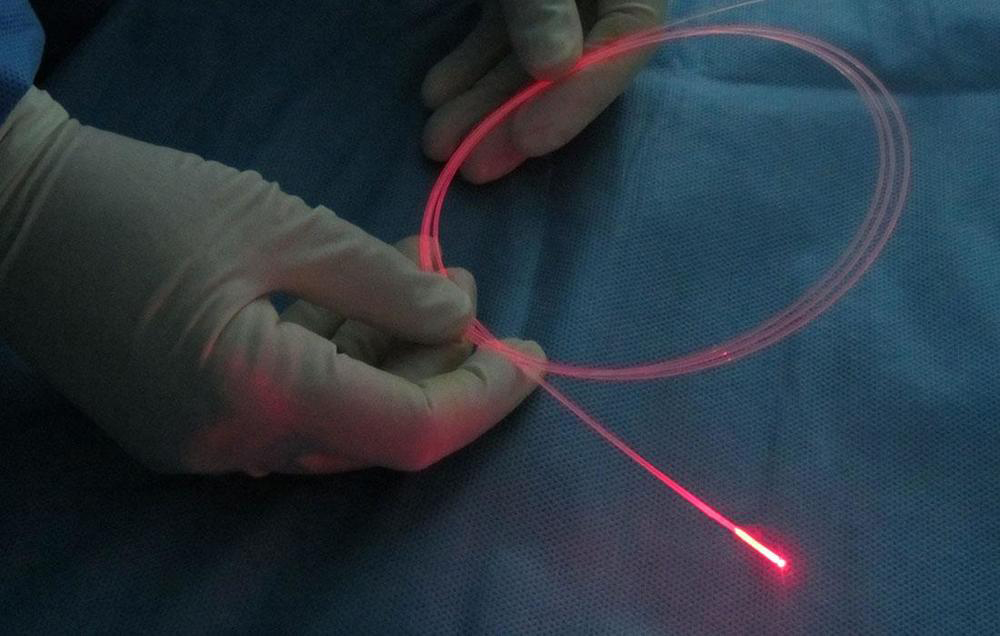
FV Hospital offers Laser Atherectomy as an advanced treatment for peripheral arterial disease, particularly in patients with heavily calcified lesions, in-stent restenosis and chronic limb-threatening ischaemia. Unlike conventional angioplasty, which compresses plaque against the artery wall, Laser Atherectomy uses laser energy to precisely remove obstructive plaque and improve blood flow.
Using the Auryon Laser Atherectomy System, our vascular specialists can treat complex vascular lesions with greater precision while minimising trauma to the vessel wall. Combined with advanced endovascular techniques, this technology expands treatment options for patients with advanced peripheral arterial disease and supports better limb salvage outcomes.
Diamond Burr Atherectomy is an advanced endovascular technique used to treat severely calcified arterial disease. Using a high-speed, diamond-coated burr, the procedure precisely modifies hardened calcified plaque, making it easier to perform subsequent treatments such as balloon angioplasty or stent placement.
This technique is particularly effective for long, complex and heavily calcified lesions that are difficult to treat with conventional endovascular procedures. When combined with other advanced endovascular technologies, rotational atherectomy helps improve blood flow, expand treatment options for complex arterial disease and support better long-term clinical outcomes.
Advanced Venous Treatments
Endovenous Laser Ablation (EVLA) is a modern, minimally invasive treatment for varicose veins that uses laser energy to close incompetent veins from within, eliminating the need for conventional vein stripping surgery. At FV Hospital, the procedure is performed using the latest ELVeS Radial™ and AngioDynamics™ systems, enabling precise treatment with less pain, minimal bruising and improved cosmetic outcomes. Most patients require only local anaesthesia, can walk immediately after the procedure and return to their normal daily activities shortly afterwards.
Radiofrequency Ablation (RFA) is a minimally invasive treatment that uses thermal energy to close incompetent veins, restoring healthy blood flow and relieving symptoms such as leg pain, heaviness, swelling and visible varicose veins. At FV Hospital, the procedure is performed using the ClosureFast™ system by Medtronic, one of the world’s most widely used RFA technologies. Compared with conventional surgery, RFA offers less pain, minimal scarring, faster recovery and a quicker return to normal daily activities.
Cyanoacrylate Closure (most commonly performed using the VenaSeal™ system) is an advanced minimally invasive treatment for varicose veins. The procedure uses a small amount of medical adhesive to seal the affected vein from within. As no thermal energy is used, there is no need for multiple injections of local anaesthetic along the vein. Clinical studies have demonstrated success rates of up to 95%, making it an effective treatment option for suitable patients.
Deep vein thrombosis (DVT) is the formation of a blood clot in a deep vein, most commonly in the leg. If left untreated, it can lead to serious complications, including pulmonary embolism and post-thrombotic syndrome. At FV Hospital, in addition to medical therapy, selected patients may benefit from advanced endovascular treatments, including catheter-directed thrombolysis, mechanical thrombectomy using the Penumbra System, balloon angioplasty, venous stenting or hybrid surgery to restore venous blood flow and help prevent long-term complications.
Compared with medical therapy alone, these advanced treatment options can more effectively restore venous circulation, reduce the risk of recurrence, minimise post-thrombotic syndrome and significantly improve patients’ quality of life.
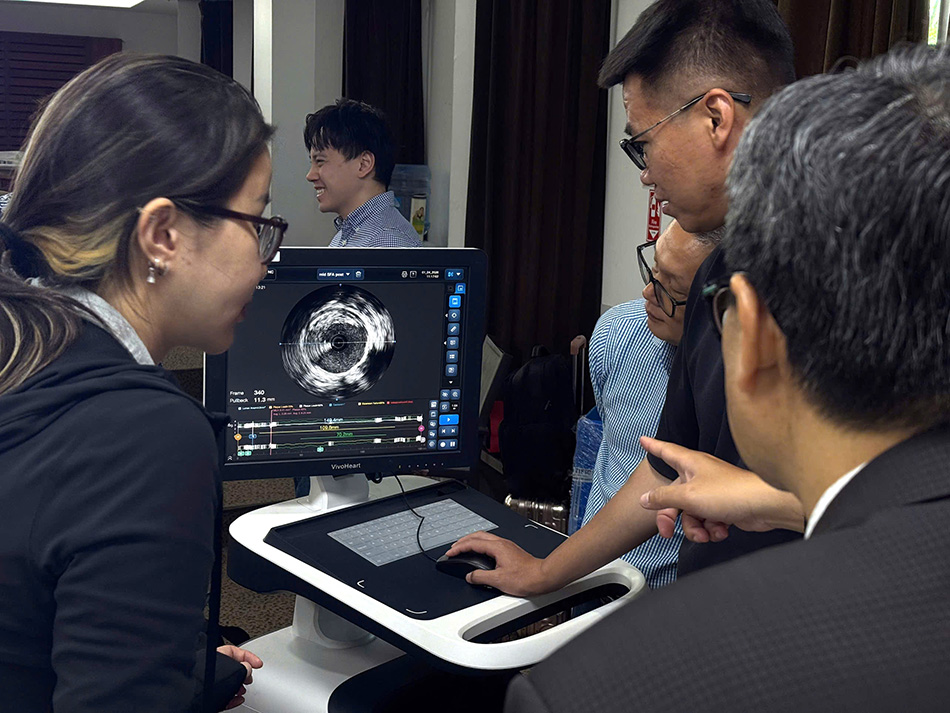
The Department of Vascular & Endovascular Surgery offers a comprehensive range of non-invasive and invasive vascular diagnostic techniques to detect arterial and venous narrowing, occlusion, aneurysms, thrombosis and vascular malformations, while assessing their impact on blood circulation. These investigations provide essential information for accurate diagnosis, treatment planning and post-treatment follow-up.
Non-invasive vascular investigations, including Doppler ultrasound, Duplex ultrasound, the Ankle-Brachial Index (ABI), Toe-Brachial Index (TBI), CT Angiography (CTA) and MR Angiography (MRA), help evaluate blood flow and detect arterial or venous disease without the need for invasive procedures.
CT Angiography (CTA) is an advanced imaging technique that provides detailed visualisation of the arterial and venous system throughout the body. By combining multi-detector CT technology with contrast media, CTA enables the accurate detection of arterial narrowing, occlusion, aneurysms, thrombosis and other vascular abnormalities. This minimally invasive investigation plays an important role in diagnosis, treatment planning and the evaluation of treatment outcomes following vascular intervention or surgery.
Invasive vascular investigations, including Digital Subtraction Angiography (DSA), venography and intravascular haemodynamic assessment, allow direct evaluation of the location and severity of vascular disease. These techniques are typically performed in complex cases or before vascular intervention and surgery to support accurate treatment planning.
FV Hospital also offers CO₂ angiography, providing a valuable alternative for patients with contrast media allergy, chronic kidney disease or impaired kidney function. This advanced technique expands treatment options while enhancing the safety of vascular interventions for high-risk patients.
Radiofrequency Ablation (RFA) for Benign Thyroid Nodules
Radiofrequency Ablation (RFA) is a minimally invasive treatment for large benign thyroid nodules or nodules causing symptoms such as difficulty swallowing, a sensation of pressure in the neck or cosmetic concerns. Under ultrasound guidance, radiofrequency energy is delivered directly into the nodule to reduce its size without the need for thyroid surgery.
Compared with conventional surgery, RFA preserves the thyroid gland, leaves no visible neck scar, reduces pain and shortens recovery time. Most patients can return to their normal daily activities shortly after the procedure while maintaining normal thyroid function.